
As Nigerian businesses grow, fleet operations often expand quickly. More vehicles are added. More drivers get hired. More routes are covered. At first, growth feels like progress. However, many companies soon notice something troubling. Fleet accountability becomes harder to maintain.
Costs start rising without clear reasons. Small issues go unnoticed. Managers feel less control than before. This challenge is common, and it grows quietly as fleets scale.
Growth increases operational complexity
When a fleet is small, accountability feels natural. Managers know the drivers. Vehicle usage is easy to track. Problems stand out quickly.
As the business scales, complexity increases. Vehicles operate across multiple locations. Drivers work on different schedules. Records become scattered. Because of this, visibility reduces.
Without clear systems, accountability weakens as complexity grows.
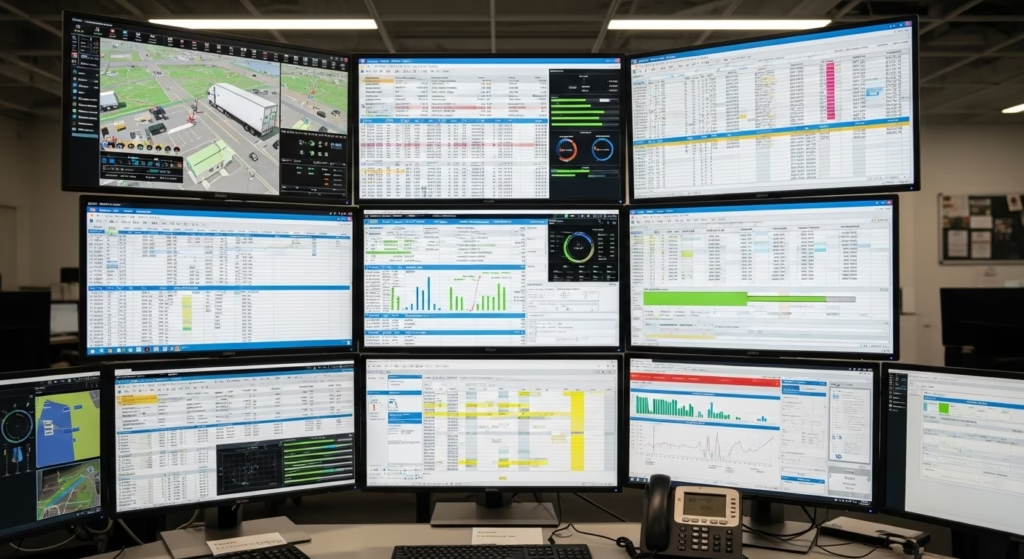
More vehicles mean less direct oversight
Scaling fleets reduce direct supervision.
Managers can no longer observe daily vehicle use. They rely on reports, updates, and summaries. Unfortunately, these reports are often incomplete or delayed.
As a result, small inefficiencies hide inside daily operations. Fuel usage varies. Maintenance delays increase. Downtime becomes harder to trace to a specific cause.
This is how fleet accountability slowly slips.
Manual processes fail at scale
Many businesses still depend on manual tracking.
Paper logs get misplaced. Spreadsheets fall behind. Approvals take too long. When fleets grow, these systems cannot keep up.
Manual processes create gaps. Those gaps allow errors, misuse, and inefficiency to go unnoticed. Over time, these gaps become expensive.
Scaling exposes the limits of manual control.
Accountability breaks when data is inconsistent
Fleet accountability depends on consistent information.
When vehicle usage data is incomplete, decisions rely on assumptions. When maintenance records are missing, breakdowns feel sudden. When downtime is not measured, productivity losses go unnoticed.
Inconsistent data removes clarity. Without clarity, accountability becomes impossible.
Teams expand faster than control systems
As businesses grow, teams expand.
More drivers mean more habits, more variations, and more risk. Without clear standards, expectations differ across teams.
Some drivers follow procedures. Others do not. Over time, inconsistency becomes normal.
Strong accountability requires shared rules and clear measurement.
Scaling without structure increases risk
Growth without structure creates vulnerability.
Fleet misuse becomes harder to detect. Costs rise quietly. Performance comparisons become unfair. Managers respond to problems instead of preventing them.
This reactive cycle drains efficiency and morale.
How to restore fleet accountability as you scale
Fleet accountability can be restored with intentional structure.
Track vehicle usage consistently across all locations. Centralize maintenance records. Monitor downtime and delays regularly. Standardize driver expectations.
Most importantly, review data frequently. Patterns appear when information is visible.
Accountability improves when facts replace assumptions.
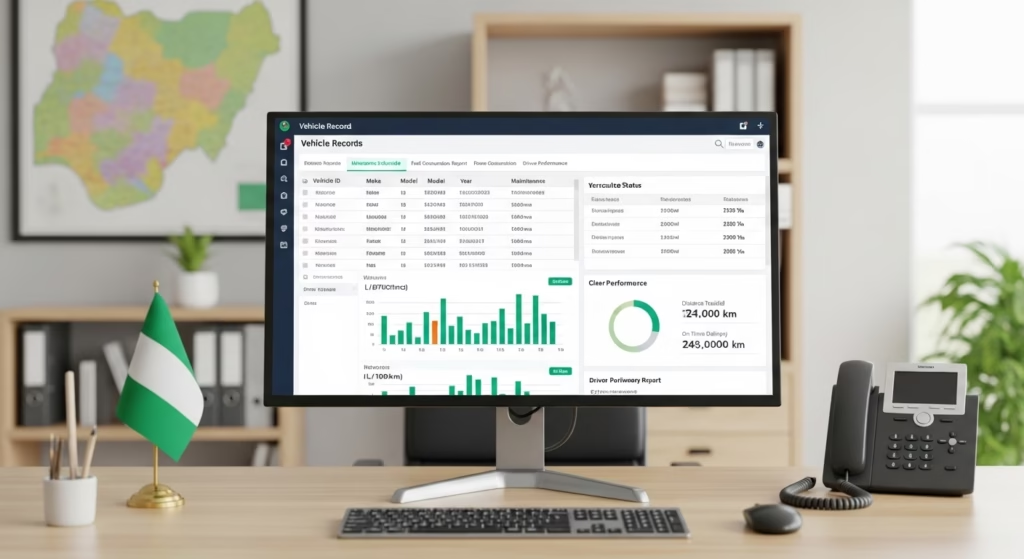
Accountability supports sustainable growth
Strong fleet accountability supports stable expansion.
Managers make confident decisions. Costs become predictable. Teams understand expectations. Vehicles stay productive longer.
Scaling no longer feels chaotic. Growth becomes controlled and sustainable.
Fleet accountability does not disappear because of growth. It disappears because visibility does. Businesses that protect visibility protect control.
As fleets scale, accountability must scale with them.